Influencer marketing for home improvement brands Good products.Better placements.
We find DIY and renovation creators whose projects suit your product, agree the terms with them and run the campaign until the content is live. One specialist agency, one point of contact, and nobody learning what grout is on your budget.
- Platforms
- Instagram, TikTok and YouTube
- Markets
- Australia, the United States, the United Kingdom and Europe
- Engagements
- Single campaigns or ongoing creator programs
- Your contact
- One point of contact, from the first call to the report
01Why creator content
We’re not here tocollect impressions.
Views are easy to buy. What renovation content does better than almost anything else is show a product doing its job, in front of people who are about to do the same job.
-
The product is shown working
A floor gets cut and clicked into place. Paint goes on in two coats and dries in real light. Viewers see what the product is like to use, which a studio shot can’t show them.
-
The audience is planning a project
People watch renovation content to learn how a job is done and what to buy for it. Your product lands in front of someone with a real reason to care.
-
Tutorials keep getting found
How-to videos can keep turning up in search long after they’re posted, particularly on YouTube. A good tutorial can keep introducing your product for a long time.
-
Trust is earned on camera
Viewers can tell whether a creator knows what they’re doing. A clean installation is more persuasive than any script you could write.
02Services
What youactually get.
Four services that follow a partnership from the first idea to the published content. Take all of them or just the part you need.
-
Creator discovery
We find creators whose projects and audiences suit your product. That means reading their finished work and their comment sections, not just their follower counts.
- Shortlists built around your product and the markets you sell in
- A close look at recent projects, audience questions and past sponsorships
- Notes on fit, likely formats and indicative cost before anyone is approached
-
Brand partnerships
We shape the opportunity, whether it is a paid sponsorship, a product integration inside a larger project or an ongoing arrangement, and agree terms both sides can work with.
- Sponsorships, integrations and product seeding where it suits the project
- Terms covering deliverables, usage rights, exclusivity and fees
-
Campaign coordination
Briefs, timelines, product delivery, approvals and deliverables. We keep the moving parts organised so the creator can concentrate on the build.
- Creative briefs written for the way creators actually work
- Timelines with room for real renovation schedules
- Product delivery, drafts and approvals tracked to agreed dates
- One point of contact for the brand and for the creator
-
Creator-led content
Content built around real projects in real homes, made in the creator’s own voice and clearly disclosed as a paid partnership.
- Formats chosen to suit the project, from long installs to short reveals
- Key product messages included accurately, without scripting the creator
- Clear ad disclosure on every platform
03Product areas
Six areas.All of them hands-on.
Each category has its own kind of content and its own practical limits. These notes are where we start when we plan a brief.
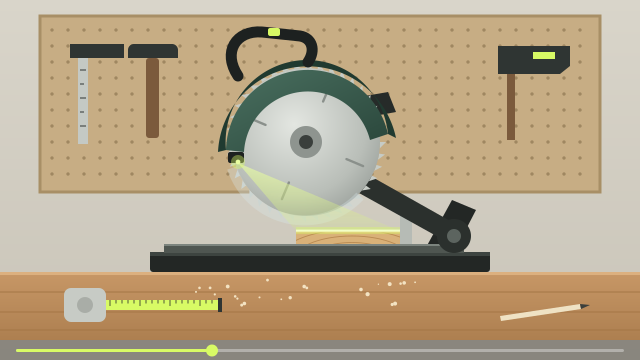
Tools and DIY equipment
Typical contentTutorials, workshop builds and first-time how-tos, where the tool is the lesson rather than a prop on the bench.
What to plan forViewers watch technique closely. Safety gear and correct handling on camera protect the brand as much as the creator.
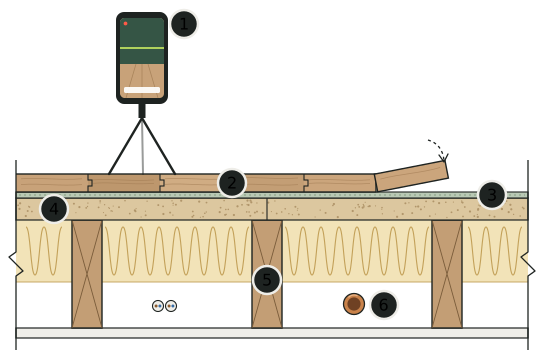
Renovation and building materials
Typical contentPlasterboard, timber, adhesives, membranes and underlay. The stuff behind the finish, explained by people who use it.
What to plan forMaterials rarely get the reveal shot. They work best in tutorials that explain why one product was chosen over another.
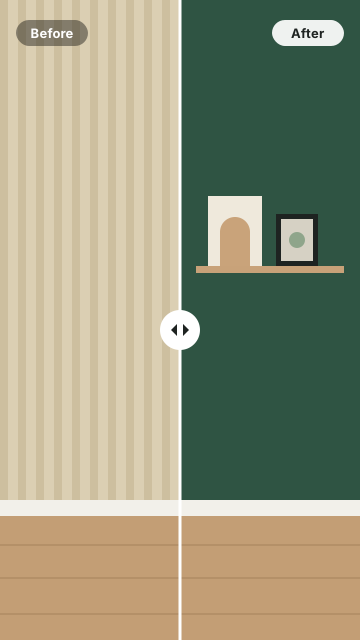
Paint and decorating
Typical contentFeature walls, colour drenching and furniture flips, filmed in daylight so the colour on screen is the colour in the tin.
What to plan forColour is hard to judge on a phone, so good content shows the finish in daylight and again at night.
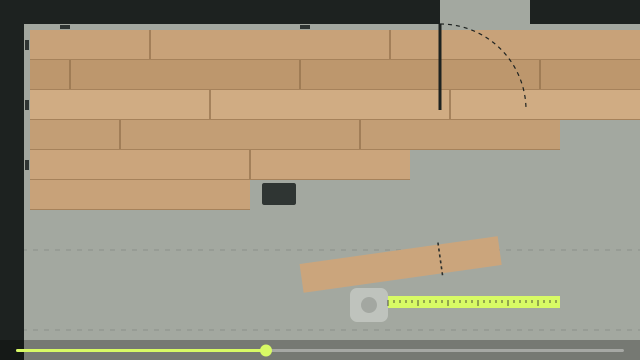
Flooring and tiles
Typical contentClick-lock installs, splashbacks and bathroom refreshes, from the underlay to the last bit of skirting.
What to plan forInstall videos are long and practical. They suit products with a clear method and a forgiving learning curve.
Home fixtures and hardware
Typical contentHandles, hinges, tapware and lighting. Small swaps that photograph well and get copied by people with a free Saturday.
What to plan forElectrical and most plumbing work needs a licensed trade in Australia, and similar rules apply in many places. The content has to be clear about who did the work.
Woodworking and home transformations
Typical contentFurniture builds, built-ins and whole-room makeovers, where one product can turn up across a dozen videos.
What to plan forBuild series run for weeks, so the product needs to arrive early and the timeline needs room for the project to run over.
04Creators
The creatorswe go looking for.
Home improvement creators aren’t one audience. The right type depends on whether you need a quick reveal or a long project that builds trust over several weeks.
Makeover creators
Room transformations over a weekend or a month, usually building to a reveal.
Renovators
People documenting a whole house or apartment project, often across dozens of videos.
Tutorial and how-to creators
Step-by-step teaching for an audience that is about to try the job.
Trade and building educators
Builders and tradespeople explaining methods, materials and the mistakes to avoid.
Woodworkers and makers
Furniture, built-ins and workshop projects with a close focus on tools and technique.
Renter-friendly DIYers
Removable, low-commitment upgrades for people who can’t renovate properly yet.
05Process
How a campaignruns, week by week.
Five stages, and each one ends with something you can review, approve or push back on.
-
Stage 1: Brief
You tell us about the product, the market, the goal and the budget range. We ask the questions creators will ask.
You getA one-page brief we both agree on
-
Stage 2: Shortlist
We propose creators with our reasons, examples of their recent work and indicative costs.
You getA shortlist you can approve or push back on
-
Stage 3: Agreement
We negotiate scope, deliverables, usage rights, exclusivity, payment terms and timing with each creator.
You getSigned agreements before any product ships
-
Stage 4: Production
We manage product delivery, project schedules, drafts and approvals, and keep both sides updated.
You getContent checked against the brief and the agreement
-
Stage 5: Live and review
Content goes live with clear disclosure. We gather the results creators share from their analytics and talk through what worked.
You getA plain-English wrap-up with the numbers we have
A generalist agency can find you an influencer with the right numbers. Home improvement asks for more than that. Projects run late because a delivery is delayed or a wall turns out not to be straight. Some work legally has to be done by a licensed trade. Viewers notice straight away when someone holds a tool the wrong way. We plan for all of it, because it’s the only category we work in.
06Questions
Questions brandsusually ask.
Do you work with brands outside Australia?
Yes. We’re based in Melbourne and work with brands and creators internationally, including the United States, the United Kingdom and Europe. Time zones are planned into the timeline.
How much does a creator partnership cost?
It depends on the creator, the formats, how long you want to use the content and whether exclusivity is involved. You get indicative costs at the shortlist stage, and our own fee is agreed with you before any work starts.
Do you have a roster of creators?
No. We don’t represent a fixed roster, so we’re not trying to fit your brief to people we already manage. We look for the right creators for each brief.
Can you work with creators we’ve already found?
Yes. We can manage partnerships with creators you already know, on their own or alongside new ones.
Who owns the content?
Usually the creator keeps ownership and the brand gets a licence to use the content in agreed ways for an agreed period. Those usage rights are written into the agreement before production starts.
How do you handle ad disclosure?
Every paid partnership is disclosed clearly, using the platform’s own tools and plain words such as “ad” or “paid partnership”. Rules differ between countries, so we check what applies where the content is published.
Can you guarantee sales or views?
No, and you should be wary of anyone who does. Platforms change what they show people and audiences don’t always behave the way anyone expects. What we can promise is how the work gets done: the right creators, clear terms and a campaign that runs on time.
How long does a campaign take?
For most projects, allow several weeks from brief to published content, and longer when the content depends on a renovation schedule. You get a realistic timeline once we understand the project.
07Enquire
Discuss apartnership.
Tell us about the product and what you’d like it to do. A rough brief is fine. We reply by email with questions or a suggested next step.
What happens next
- We read the enquiry and look at your product and your market.
- We reply by email, usually with a few questions about timing and budget.
- If it looks like a fit, we put together a first shortlist and an outline of costs.
Prefer email? hi@sharpstudio.com.au